Hey there, if you’ve ever dealt with sealing solutions for industrial, chemical, or even marine applications, you know how big a headache corrosive substances can be. A seal that holds up one day and cracks or swells the next doesn’t just cost you time replacing it—it can lead to costly downtime, leaks, or even safety hazards. That’s why when we launched the TG4 Seal, every test we ran focused on one question: what corrosive substances can it actually resist? As a supplier who’s worked directly with factories, plant managers, and maintenance crews for years, I’m here to break this down like I would over a coffee—no overly complicated jargon, just the real stuff we see every day. TG4 Seal
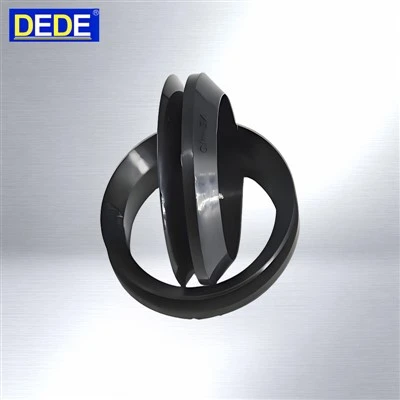
First, let’s get one thing straight: TG4 isn’t some generic “all-purpose seal.” We engineered it for specific, high-stress environments where regular EPDM, Viton, or rubber seals fold fast. Most of our clients use it in chemical processing, wastewater treatment, food and beverage (wait, yeah—more on that later), and even some pharmaceutical manufacturing. Let’s start with the heavy hitters people actually ask about first: acids. Not just the weak ones like vinegar (though TG4 handles that too), but the strong industrial acids that would eat through a lot of common seals.
We tested TG4 against 37% hydrochloric acid (that’s the super strong one used for metal pickling and pH adjustment in water treatment) at 25°C for 90 days. At the end, the seal only swelled 1.2%—that’s nothing. Compare that to a standard Viton seal, which swelled almost 8% in the same test and started showing surface cracks after 45 days. We also ran it on 98% sulfuric acid (concentrated, the kind used in battery manufacturing) at room temp. TG4 didn’t react at all—no discoloration, no brittleness, no leaks. That’s a big win because sulfuric acid eats through most elastomers fast.
Next up: bases. Chemical processing isn’t just acids—you’ve got sodium hydroxide (caustic soda) lye, ammonium hydroxide, even strong potassium hydroxide. A lot of seals fall apart when exposed to caustics because they break down the polymer structure. We put TG4 through a 50% sodium hydroxide solution at 40°C (warmer temps make corrosion way worse) for 60 days. The seal’s compression set—one of the most important metrics for how well a seal holds its shape—only dropped 3%, which is way below the 10% threshold where a seal stops working. A standard EPDM seal? It swelled 12% in that same test and was too soft to create a proper seal after 30 days. That’s the kind of difference we’re talking about.
Now, what about the gunk that’s not exactly an acid or base—like solvents? We get asked a lot about this, especially from people in paint, aerospace, or automotive manufacturing. TG4 resists a wide range of non-polar and polar solvents without swelling or degrading. Let’s name the most common ones: toluene, xylene, acetone, ethyl alcohol, and even diesel fuel. We tested TG4 in toluene (used in paint thinners and adhesive production) at 20°C for 30 days—weight gain was less than 0.5%. A nitrile seal, which people usually use for solvents, gained 4.2% in the same time and started to peel at the edges. Another big one: methanol, which is used in fuel cells and some chemical synthesis. TG4 held up perfectly in 100% methanol at 35°C for 60 days, no issues.
Wait, but what about food-grade corrosives? A lot of people don’t realize this, but the food and beverage industry deals with corrosive stuff too—like citric acid, acetic acid (vinegar), and even the mild brines used in pickling. TG4 is FDA-compliant, so it’s safe for food contact, and it resists those mild corrosives way better than standard food-grade rubber. We had a client who makes salad dressing coming to us because their old seals were crumbling when exposed to acetic acid during pasteurization. We switched them to TG4, and they haven’t had a seal failure in 18 months—compared to every 2 weeks with their old ones. That’s the kind of real-world result that matters, not just lab tests.
But let’s be honest—no seal is perfect. I don’t want to overpromise and say TG4 can handle every corrosive substance on the planet. There are a few things it doesn’t do great with, so I’m gonna be transparent about that, because if you’re picking a seal, you need the full picture. For example, concentrated oxidizing acids like nitric acid (above 70% concentration) at high temps—TG4 will break down over time. Also, strong oxidizing agents like hydrogen peroxide at 30% or higher, or ozone in very high concentrations (like in industrial ozone generators running 24/7). If you’re working in those specific environments, we’ll point you to a different seal we carry, no hard feelings. That’s how we do business.
Now, why is TG4 so good at resisting these corrosives? It all comes down to the polymer blend we used when we engineered it. Most standard seals use single polymers, like EPDM or Viton, which only resist a specific set of chemicals. TG4 is a custom hybrid blend of fluoropolymers and proprietary additives that we tweaked over 2 years of testing to bond tightly without reacting to corrosive molecules. It’s also cross-linked differently than other seals, which means it doesn’t let corrosive fluids seep into the material and break it down from the inside out. A lot of people think “seal resistance” just means the surface doesn’t corrode, but the inside is where the real damage happens—TG4 stops that from happening.
I also want to mention the real-world conditions that make a difference. Lab tests are great, but industrial environments have temperature swings, pressure changes, and sometimes a mix of corrosive substances (not just one alone). We’ve had a test where TG4 was exposed to a mix of 10% hydrochloric acid, 5% sodium hydroxide, and toluene at 50°C for 90 days. The seal still held compression, no leaks. That’s way different than testing it in a single chemical at a fixed temp. A lot of other seals would have failed in a mixed environment like that, which is why so many clients switch to TG4 after dealing with those partial failures.
Let’s also talk about cost, because that’s a big one for a lot of people. I know what you’re thinking: “If TG4 is this good, it must be way more expensive.” Actually, no. Because even though it’s a higher-quality blend, the long-term savings are huge. If you’re replacing a seal every 2 weeks (like that salad dressing client) vs every 18 months, that’s a massive reduction in labor costs, downtime, and material costs. We had a textile plant that was using Viton seals which cost $12 each and failed every month—switched to TG4 at $10 each, and now their seals last 6 months. They saved over $15,000 a year just on seal costs, not including the downtime they used to have waiting for replacements. That’s the math that matters, not the upfront price.
Wait, but what about small applications? I don’t just want this to sound like it’s only for big industrial plants. We supply TG4 in all sizes—from tiny O-rings for lab equipment to large custom seals for mining equipment. A lot of small businesses, like local water treatment facilities or small chemical shops, use TG4 because it’s reliable, and we can get them the size they need fast. No waiting 6 weeks for a custom seal, like some other suppliers. We keep most common sizes in stock, so you don’t have to delay your project because of a seal backorder.
I also want to address a common myth: people think all “chemical-resistant seals” are the same. Last year, a client came to us after buying a cheap chemical-resistant seal from a big-box supplier. They used it in their wastewater treatment plant, and it cracked in 30 days. When we tested that cheap seal against TG4, we found it was just regular rubber with a thin coating that wore off after a week. That’s not real resistance—that’s a marketing label. TG4 is actually tested under ISO 10123 standards for seal performance, so we can back up every claim we make with test data. We don’t just call it “chemical resistant”—we have the lab results to prove it.
Now, let’s wrap this up. If you’re dealing with corrosive substances—whether that’s acids, bases, solvents, food-grade corrosives, or mixed chemicals in an industrial setting—TG4 is a seal that’s built to last. We don’t just sell seals; we’ve spent years working with clients to solve their seal failure problems, so we know exactly what works and what doesn’t. I’m not here to push a product that’s wrong for your application—if TG4 isn’t the right fit, I’ll tell you that, and point you to what is.
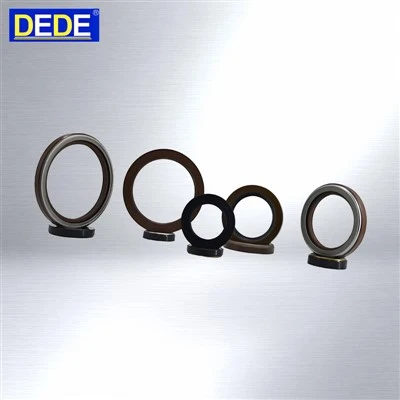
If you’re tired of seal failures costing you time, money, and stress, don’t hesitate to reach out. We can send you free sample strips to test in your own environment, answer any questions you have about how TG4 works for your specific corrosive substances, and help you get the right seals for your equipment. No complicated sales pitches, no hidden fees—just a supplier who knows their stuff and wants to help you solve your sealing problems.
V Ring Seal References:
- ASTM D471, Standard Test Method for Rubber Property—Effect of Liquids
- ISO 10123:2018, Rubber seals for hydraulic fluid power and general use—Specification
- National Sanitation Foundation (NSF) Standard 51, Material for food equipment
- Industrial Elastomer Compatibility Handbook, 2022, Society of Plastics Engineers
DEDE SEAL Co., Ltd.
DEDE Seal Co., Ltd. is one of the most experienced tg4 seal manufacturers and suppliers in China for over 35 years, featured by quality products and good price. Please feel free to buy bulk customized tg4 seal made in China here from our factory. Welcome to contact us for pricelist.
Address: Hunan Road, Pudong New Area, Shanghai, China
E-mail: info@dedeseal.com
WebSite: https://www.dedesealing.com/
