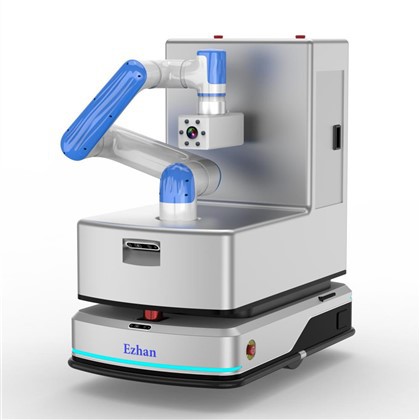
As an AGV supplier, I’ve witnessed firsthand the transformative impact of Automated Guided Vehicles on modern industrial operations. AGVs are no longer just a luxury; they’ve become an essential part of efficient and intelligent production lines. One of the most critical aspects of AGV deployment is path planning. Optimizing the path planning of AGVs can significantly enhance productivity, reduce costs, and improve overall operational reliability. In this blog, I’ll share some insights and strategies on how to achieve this optimization based on our years of experience in the industry. AGV
Understanding the Basics of AGV Path Planning
Before diving into optimization strategies, it’s crucial to understand what AGV path planning entails. At its core, path planning is the process of determining the best route for an AGV to move from its current position to a specified destination while avoiding obstacles and adhering to various constraints such as traffic rules, speed limits, and work area boundaries.
There are two main types of path planning: global path planning and local path planning. Global path planning focuses on finding an optimal route across the entire workspace, taking into account static obstacles such as walls, shelves, and fixed machinery. Local path planning, on the other hand, deals with real – time obstacle avoidance and route adjustment in response to dynamic obstacles like human operators or other moving AGVs.
Factors Affecting AGV Path Planning
Several factors can influence the effectiveness of AGV path planning. These factors need to be carefully considered during the planning and optimization process:
- Workspace Layout: The physical layout of the workspace, including the location of storage areas, production lines, and charging stations, has a significant impact on path planning. A well – designed layout can minimize travel distances and reduce congestion.
- Obstacles: Static and dynamic obstacles are major challenges in path planning. Understanding the location and movement patterns of obstacles is essential for creating safe and efficient routes.
- AGV Fleet Size: The number of AGVs operating in the workspace affects traffic management and path planning. A larger fleet requires more sophisticated algorithms to avoid collisions and ensure smooth operation.
- Task Requirements: Different tasks may have specific requirements for path planning, such as the need to transport heavy loads or reach specific locations within a certain time frame.
Optimization Strategies for AGV Path Planning
1. Advanced Mapping and Localization
Accurate mapping and localization are the foundation of effective path planning. High – precision maps of the workspace can be created using technologies such as laser scanners, cameras, and inertial measurement units (IMUs). These maps provide detailed information about the layout, obstacles, and landmarks in the environment.
In addition to mapping, AGVs need to be able to accurately determine their position within the workspace. This can be achieved through a combination of sensors and algorithms, such as simultaneous localization and mapping (SLAM). SLAM allows AGVs to build maps and localize themselves in real – time, even in dynamic environments.
2. Intelligent Routing Algorithms
Using intelligent routing algorithms is crucial for optimizing AGV paths. Some of the commonly used algorithms include:
- Dijkstra’s Algorithm: This algorithm finds the shortest path between two nodes in a graph. It is suitable for static environments where the cost of each edge (i.e., the travel distance) is known in advance.
- A Algorithm*: An extension of Dijkstra’s algorithm, A* uses a heuristic function to estimate the cost from a node to the goal. This can significantly reduce the search space and improve the efficiency of path planning.
- Genetic Algorithms: Genetic algorithms are inspired by the process of natural selection. They can be used to find optimal paths in complex environments with multiple constraints. By evolving a population of potential solutions over time, genetic algorithms can identify the best path based on a fitness function.
3. Traffic Management and Coordination
When multiple AGVs are operating in the same workspace, effective traffic management and coordination are essential to avoid collisions and congestion. Some strategies for traffic management include:
- Priority Assignment: Assigning priorities to different AGV tasks can help ensure that critical tasks are completed first. For example, an AGV carrying urgent materials can be given a higher priority than one transporting general supplies.
- Collision Avoidance Rules: Implementing collision avoidance rules, such as right – of – way rules and minimum safe distances, can prevent AGVs from colliding with each other. These rules can be enforced through software programming and real – time monitoring.
- Dynamic Path Re – planning: In case of unexpected events, such as the appearance of a new obstacle or a change in task requirements, AGVs should be able to re – plan their paths in real – time. This requires a flexible and responsive path planning system.
4. Data Analytics and Machine Learning
Data analytics and machine learning techniques can be used to continuously optimize AGV path planning. By collecting and analyzing data on AGV movements, traffic patterns, and task completion times, we can identify areas for improvement and make data – driven decisions.
Machine learning algorithms can learn from historical data to predict future traffic conditions and adjust path planning accordingly. For example, a machine learning model can predict peak traffic hours and recommend alternative routes to avoid congestion during those times.
Benefits of Optimized AGV Path Planning
Optimizing AGV path planning can bring several benefits to industrial operations:
- Increased Productivity: By reducing travel distances and avoiding congestion, AGVs can complete tasks more quickly, leading to increased overall productivity.
- Cost Savings: Optimized path planning can reduce energy consumption, as AGVs will travel shorter distances and spend less time idling. This can result in significant cost savings over time.
- Improved Safety: Effective path planning and collision avoidance can reduce the risk of accidents, protecting both AGVs and human operators.
- Enhanced Flexibility: A flexible path planning system allows for easy adjustment to changes in the workspace layout or task requirements, providing greater operational flexibility.
Contact Us for AGV Purchase and Consultation

If you’re looking to enhance your industrial operations with optimized AGV solutions, we’re here to help. Our team of experts has extensive experience in AGV path planning and deployment. We can provide customized solutions based on your specific needs and requirements. Whether you’re a small – scale manufacturer or a large – scale distribution center, we have the expertise and resources to help you achieve your goals.
Robot Accessories Contact us to discuss how our AGV solutions can revolutionize your operations and drive your business forward.
References
- LaValle, S. M. (2006). Planning Algorithms. Cambridge University Press.
- Thrun, S., Burgard, W., & Fox, D. (2005). Probabilistic Robotics. MIT Press.
- Nilsson, N. J. (1971). Problem – Solving Methods in Artificial Intelligence. McGraw – Hill.
Shenzhen Ezhan Technology Co., Ltd.
We’re known as one of the most reliable AGV manufacturers and suppliers in China. With abundant experience, we warmly welcome you to buy bulk customized AGV from our factory. If you have any enquiry about cooperation, please feel free to email us.
Address: Room 1808, 1809, 1810, Building 2, Aipark, Baolong 4th Road, Longgang District, Shenzhen City
E-mail: sales01@ezhankeji.com
WebSite: https://www.ezhanrobot.com/
