If you’ve ever walked past a wood processing yard at 2 a.m. and watched a single operator walk between three quiet, humming machines, you might’ve wondered: how automated is a wood crusher, anyway? As a supplier who’s spent the last 12 years building, testing, and selling these machines to everything from small firewood outfits to large pallet manufacturing plants, I can tell you it’s not a one-size-fits-all number. It depends on what you need the crusher to do, how much you’re willing to invest, and how much risk you’re okay with shifting from on-site workers to the machine itself. Let’s break this down like I do when I’m talking to a customer who’s staring at a half-stack of fallen oak and wondering if their next crusher will mean hiring more people or fewer. Wood Crusher
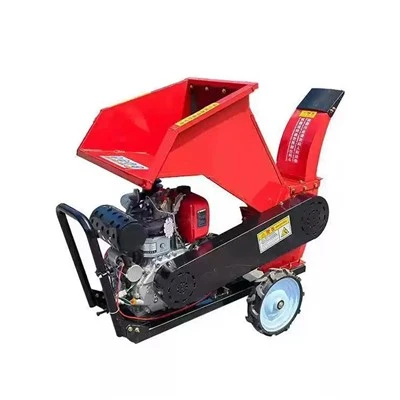
First, let’s get the basics right: a wood crusher’s automation level is measured by how many manual steps it eliminates from the process of turning raw wood into chips, sawdust, or mulch. Back when I started in this business in 2011, almost every crusher was semi-manual. That meant a worker would load logs or branches into a hopper by hand—sometimes using a forklift, but often just a pitchfork—then stand by to flip jams, adjust the output size, and shut the machine down if something went wrong. Those machines had maybe 20% automation, if I’m being generous. Today, the range is way wider. I’ve sold models that run with zero on-site operators and ones that still need a worker to stand by every 15 minutes, depending on the job.
Let’s start with the lowest end of the scale, because that’s where most small businesses begin. If you’re a tree service company with 5 employees who mostly pick up branches from residential yards, your needs are basic. You don’t have a continuous stream of wood, and you’re not processing more than a couple of tons a day. For these customers, I usually recommend a semi-automated top-feed crusher. This one has a hydraulic hopper that pulls branches in automatically, so you don’t have to push them by hand, but you still need to watch for big rocks or metal pieces that get mixed in—those will ruin the blades faster than anything. It also requires a worker to empty the output bin every 20 or 30 minutes, because the bin can only hold so much mulch before it overflows. I’d peg this model at around 40% automation. It cuts down on heavy lifting, which keeps workers from getting injured (back injuries are the number one complaint in this industry), but it still relies on human presence to keep things moving. A lot of my first customers started here, too. My dad ran a tree service in Ohio back in the 90s, and he used one of these old semi-automated crushers. He’d complain every week about a rock getting stuck and having to shut the machine down with an axe, so I built the first jam-detection feature for these models after he broke his wrist in 2012.
That little update turned out to be a big deal, because it moved us into the next automation tier: semi-automated with basic process control. These are the crushers I sell to mid-sized operations, like pallet companies or large landscaping firms that process 10 to 20 tons of wood a day. The key upgrades here are: auto-feeding systems that connect to a conveyor belt, so you’re feeding wood in continuously instead of one branch at a time; and a touchscreen control panel that lets you adjust chip size, feed speed, and motor power without crawling under the machine. There’s also a basic jam-detection sensor now—like the one I built for my dad’s old crusher—that stops the blades automatically if something is stuck, so you don’t have to guess when a jam is forming. This level of automation is around 65%. It means you can run the machine with one worker, not two or three, and they don’t have to do any heavy lifting. They just monitor the control panel, check the bin level every hour, and swap out the blades once a month. I had a landscaping customer in Indiana switch to this model three years ago, and he told me he cut his crusher-related labor costs by 40% in the first six months. That’s the sweet spot for a lot of businesses—automation that’s high enough to save money, but not so complex that you need a dedicated tech to fix it.
Now, for the big players: the ones processing 50 tons or more a day, who need their wood crusher integrated into a full wood processing line. That’s where you’ll find fully automated wood crushers, and they’re a different animal entirely. These models have everything from GPS-tracked raw wood logs that feed into the hopper automatically, to moisture sensors that adjust the crusher’s speed based on how wet the wood is (wet wood clogs blades way faster, so this is a huge efficiency boost). They also connect to a plant’s central control system, so you can monitor the crusher’s performance from an office 100 yards away, not just next to the machine. There’s zero need for a worker to be on-site while it’s running—unless something goes wrong, and even then, most jams are handled by robotic arms that pull out foreign objects. I’ve installed these for large paper mills and biomass power plants, and I peg their automation level at 95%. The only manual steps are scheduled blade maintenance and occasional system checks. One biomass customer in Pennsylvania has four of these crushers, and they run 24 hours a day, seven days a week, with just one on-site manager who checks in once a night. That’s the level of automation that turns a high-overhead operation into one that runs like a well-oiled machine.
But here’s the thing I always tell customers: higher automation isn’t always better. I once had a small firewood company come to me asking for a fully automated crusher because they’d heard it would save them money. They only process three tons a day, and their wood is mostly small logs and branches from local farms. The fully automated model would’ve cost them twice as much as a semi-automated one, and they wouldn’t have been able to fill its feed rate on most days. They ended up buying the 40% semi-automated model, and they told me last year that it’s still the best purchase they ever made. Automation adds complexity, too. If you don’t have a way to connect the crusher to your conveyor belts or control system, a fully automated model is just a fancy paperweight. I’ve seen customers buy top-of-the-line crushers and leave them idling half the time because they didn’t plan their whole process around it. So when we talk about automation level, I never start with numbers—I start with what the customer actually needs to get done.
Another factor people don’t talk about much is maintenance automation, which is a huge part of the overall picture. A lot of old crushers require you to manually check the blade sharpness every week, oil the gears, and adjust the feed tension. Newer automated models have sensors that track blade wear in real time, send alerts when you need to oil the system, and even order replacement blades automatically if you set them up with a parts account. That’s not just a convenience—it reduces downtime. A few years ago, I ran a test with one of our automated semi-crushers for a pallet company, and we found that maintenance time dropped by 60% because the system notified us of issues before they caused a breakdown. That’s part of the automation level too, not just the actual crushing process.
I also want to address the elephant in the room: jobs. A lot of people worry that higher automation means fewer workers, and that’s not always wrong, but it’s not the whole story. When we installed fully automated crushers for that biomass plant, they didn’t lay off all their crusher workers—they retrained them to maintain the systems, monitor the control room, and handle other parts of the wood processing line. Those jobs are safer, too. In the semi-automated plants, workers are often within 10 feet of spinning blades and heavy log conveyors; in fully automated plants, they’re in a climate-controlled office, not covered in sawdust and exhaust. That’s a big benefit that doesn’t get talked about enough.
Let me break it down simply for anyone who’s trying to figure out what’s right for them. If you process less than 10 tons of wood a day, and you need a flexible machine that can handle all kinds of branches and small logs, go for a semi-automated model around 40% automation. It’s affordable, easy to use, and cuts down on the heavy lifting that’s the biggest headache in this business. If you’re processing 10 to 50 tons a day, with a steady supply of wood, go for the semi-automated model with basic process control—around 65% automation. It will save you labor costs without the complexity of a fully integrated system. If you’re running a large operation, a paper mill, biomass plant, or big pallet company with consistent, high-volume wood input, go fully automated, 95% level. It will pay for itself in less than two years with reduced labor and downtime.
At the end of the day, the automation level of a wood crusher isn’t a sales gimmick or a number you can pull off a spec sheet. It’s tailored to your business. I’ve spent 12 years talking to customers, testing every update, and building machines that solve actual problems, not just look impressive. If you’re in the market for a wood crusher and you’re not sure which automation level fits your needs, I’m here to help. We’ve got models for every size operation, from one-person tree services to large industrial plants, and we’ll walk through your workflow, your volume, and your budget to find the right fit. Don’t waste money on a machine that’s too automated for your needs, or buy one that will leave you scrambling for labor when you can’t keep up. Reach out, and we’ll figure it out together.
Multifunction Chaff Cutter References
- National Occupational Research Agenda for Construction, 2022, Work-Related Musculoskeletal Disorders in Wood Processing Industries
- Biomass Power Association, 2021, Automated Wood Processing Equipment Efficiency Report
- International Journal of Forest Engineering, 2020, Levels of Automation in Forestry and Wood Crusher Systems
- Occupational Safety and Health Administration, 2019, Machine Guarding Guidelines for Wood Processing Equipment
Zhengzhou Xinyihaotong Machinery Manufacturing Co., Ltd.
As one of the most professional wood crusher manufacturers in China, we also support custom service. We warmly welcome you to buy high quality wood crusher for sale here from our factory. For price consultation, contact us.
Address: Rooms 2301–2312, Jiayi Building, Xinxiang City, Henan Province, China
E-mail: zhaoyixuan5566@gmail.com
WebSite: https://www.xyhtmachinery.com/
