Hey there! I’m an anchor bolts supplier, and I’ve been in this biz for quite a while. One question I get a lot from customers is, "What’s the difference between a tapped anchor bolt and a non – tapped anchor bolt?" Well, let’s dive right in and clear up this confusion. Anchor Bolts
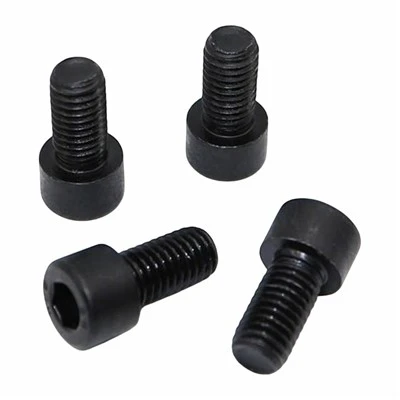
What Are Anchor Bolts Anyway?
Before we get into the differences, let’s quickly talk about what anchor bolts are. Anchor bolts are used to attach structural elements to concrete. Think of buildings, bridges, and even some heavy – duty machinery. These bolts are crucial for ensuring that everything stays in place and is safe. They come in all sorts of shapes and sizes depending on the specific application.
Tapped Anchor Bolts
Let’s start with tapped anchor bolts. A tapped anchor bolt is a type of bolt that has internal threads. You can think of it like a little tube with threads on the inside. These threads are designed to accept a screw or a stud.
How They’re Made
The manufacturing process for tapped anchor bolts is a bit more involved. First, a bolt blank is made. Then, a tapping operation is performed. This is where a special tool cuts the internal threads into the bolt. It’s a precise process because the threads need to be exactly the right size and pitch to work properly with the mating screw or stud.
Where They’re Used
Tapped anchor bolts are great for applications where you need to make adjustments or where you might need to remove and replace parts easily. For example, in some machinery, you might have components that need to be swapped out for maintenance. With a tapped anchor bolt, you can simply unscrew the stud or screw and make the change. They’re also used in some construction projects where you need to attach items that can’t be directly welded or bolted. You can use a tapped anchor bolt to create a threaded connection that’s strong and reliable.
Advantages
One of the big advantages of tapped anchor bolts is their flexibility. You can use different types of screws or studs with them depending on your needs. They also provide a clean look because the screw or stud is recessed into the bolt. This can be important in applications where aesthetics are a consideration.
Disadvantages
On the downside, the tapping process adds to the cost of manufacturing. So, tapped anchor bolts are generally more expensive than non – tapped ones. Also, they require a bit more care during installation. You have to make sure the screw or stud is properly tightened to avoid any looseness.
Non – Tapped Anchor Bolts
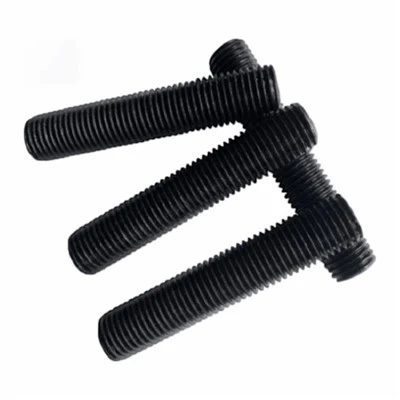
Now, let’s talk about non – tapped anchor bolts. These are the more traditional type of anchor bolts. They don’t have internal threads. Instead, they’re usually used with a nut on the outside.
How They’re Made
The manufacturing of non – tapped anchor bolts is relatively straightforward. You start with a metal rod, and then it’s cut to the right length and shaped. Sometimes, the end might be bent or have a special shape depending on the application. There’s no need for the tapping process, which makes the production faster and cheaper in some cases.
Where They’re Used
Non – tapped anchor bolts are widely used in construction. They’re great for attaching large structural elements to concrete, like columns and beams. When you’re building a high – rise building, you’ll see a lot of non – tapped anchor bolts holding everything together. They’re also used in industrial settings where large and heavy equipment needs to be securely fastened to the ground.
Advantages
One of the main advantages of non – tapped anchor bolts is their strength. Since they rely on the nut and the thread on the outside of the bolt, they can handle a lot of tension and shear forces. They’re also cheaper to produce, which means they’re more budget – friendly for large – scale projects.
Disadvantages
Non – tapped anchor bolts are less flexible compared to tapped ones. Once they’re installed with a nut, it’s more difficult to make adjustments. You might have to loosen the nut and re – position the whole assembly, which can be time – consuming. And in some cases, the exposed nut might not look as nice, especially in applications where appearance matters.
Comparison in Performance
Load – Bearing Capacity
When it comes to load – bearing capacity, non – tapped anchor bolts usually have the edge. The nut on the outside of the bolt distributes the load over a larger area, which allows it to handle higher tension and shear forces. Tapped anchor bolts, on the other hand, can have a lower load – bearing capacity because the internal threads can weaken the bolt slightly.
Corrosion Resistance
Both types of anchor bolts can be made with corrosion – resistant materials, but non – tapped anchor bolts are often more exposed to the elements since the nut is on the outside. Tapped anchor bolts, with the screw or stud inside, might have a bit better corrosion protection in some cases.
Ease of Installation
Tapped anchor bolts can be easier to install in some situations. You just need to insert the bolt into the pre – drilled hole in the concrete and then screw in the stud or screw. Non – tapped anchor bolts require you to thread the nut onto the bolt, which can be a bit more of a hassle, especially in tight spaces.
Choosing the Right Type
So, how do you choose between tapped and non – tapped anchor bolts? Well, it really depends on your specific application.
If you’re working on a project where you need flexibility and easy disassembly, tapped anchor bolts are the way to go. They’re also great for applications where appearance is important.
On the other hand, if you’re dealing with a large – scale construction project or you need high load – bearing capacity, non – tapped anchor bolts are probably your best bet. They’re strong, reliable, and cost – effective.
Conclusion
In conclusion, both tapped and non – tapped anchor bolts have their own unique features and uses. As an anchor bolts supplier, I’ve seen firsthand how important it is for customers to understand these differences. Whether you’re a contractor, an engineer, or someone working on a DIY project, choosing the right type of anchor bolt can make a huge difference in the success of your project.
Nuts If you’re still not sure which type of anchor bolt is right for you, don’t worry! I’m here to help. Just drop me a line, and we can have a chat about your specific needs. Whether it’s the load requirements, the installation environment, or the budget, I’ll do my best to recommend the perfect anchor bolts for your project. Looking forward to working with you!
References
- "Structural Fasteners Handbook", McGraw – Hill Engineering
- "Anchor Bolts: Design and Installation Guide", American Concrete Institute
Handan Jihao Fastener Co., Ltd.
We’re known as one of the most professional anchor bolts manufacturers and suppliers in China. With abundant experience, we warmly welcome you to wholesale customized anchor bolts made in China here from our factory. If you have any enquiry about cooperation, please feel free to email us.
Address: A2, Row 31, Feiyu Screw World, Hebei Pu, Linmengguan Town, Yongnian District, Handan City, Hebei Province
E-mail: wenzhaona0@gmail.com
WebSite: https://www.chinaboltnut.com/
