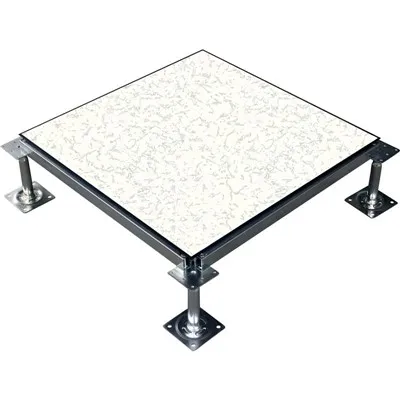
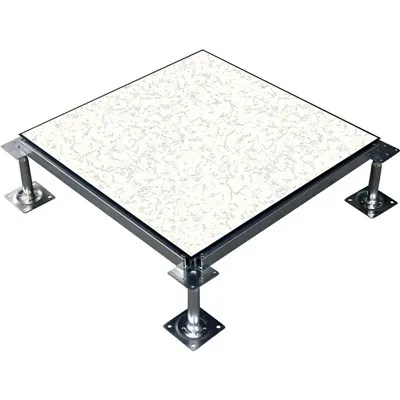
As a provider of steel raised access flooring, I’ve had countless inquiries about how these panels are connected. It’s a crucial aspect that significantly affects the overall performance, stability, and durability of the flooring system. Today, I’ll delve into the different connection methods between steel raised access flooring panels, offering insights that will help you make informed decisions for your next project. Steel Raised Acess Flooring
Welded Connections
One common way to connect steel raised access flooring panels is through welding. Welding offers a high – strength connection that unites the panels into a single, cohesive unit. The process involves using heat to melt the edges of the steel panels and then allowing them to cool and solidify, creating a bond as strong as the base metal itself.
There are different welding techniques applicable to steel raised access flooring. For instance, MIG (Metal Inert Gas) welding uses a continuously fed wire electrode and an inert gas to shield the weld from atmospheric contaminants. This method is known for its high deposition rate, making it suitable for large – scale installations. TIG (Tungsten Inert Gas) welding, on the other hand, employs a non – consumable tungsten electrode. It provides precise control over the weld, which is excellent for achieving high – quality, aesthetically pleasing joints.
However, welded connections also have their drawbacks. The welding process requires skilled labor and proper safety equipment. Welding can also distort the panels if not done correctly, causing unevenness in the flooring surface. Moreover, once the panels are welded together, disassembly becomes extremely difficult, making future repairs or modifications a challenge.
Bolted Connections
Bolted connections are another popular option in steel raised access flooring. This method uses bolts and nuts to fasten the panels together. Bolted connections are known for their simplicity and reusability. They are relatively easy to install and do not require specialized welding equipment.
When installing bolted connections, holes are pre – drilled in the panels at specific intervals. The panels are then aligned, and bolts are inserted through the holes and tightened with nuts. This allows for a degree of flexibility, as the panels can expand or contract with changes in temperature and humidity without causing undue stress on the connection.
Bolted connections are also advantageous when it comes to maintenance and replacement. If a panel is damaged, it can be easily removed by simply loosening the bolts, and a new panel can be installed in its place. However, bolted connections may be prone to loosening over time due to vibrations, which requires periodic tightening to maintain the structural integrity of the flooring system.
Clip – On Connections
Clip – on connections are a more innovative and user – friendly way of connecting steel raised access flooring panels. These connections use specially designed clips that are attached to the edges of the panels. The clips interlock with each other, holding the panels firmly in place.
One of the main advantages of clip – on connections is their ease of installation. They can be installed quickly, even by semi – skilled labor, reducing installation time and costs. They also provide a certain level of flexibility, as the clips can absorb some movement between the panels.
In addition, clip – on connections offer a clean and seamless appearance, as there are no visible bolts or welds on the surface of the flooring. This makes them a popular choice for applications where aesthetics are important, such as in office spaces or high – end commercial buildings. However, the strength of clip – on connections may be limited compared to welded or bolted connections, especially in high – traffic areas or applications where heavy loads are expected.
Adhesive Connections
Adhesive connections involve using a special adhesive to bond the steel raised access flooring panels together. The adhesive is applied to the edges of the panels, and the panels are then pressed together until the adhesive cures.
Adhesive connections can provide a strong and durable bond. They can also seal the joints between the panels, preventing the ingress of dust, moisture, and other contaminants. This is particularly beneficial in cleanroom environments or areas where hygiene is a concern.
However, the success of adhesive connections depends on proper surface preparation and the correct application of the adhesive. The panels need to be clean and dry before the adhesive is applied. Improper application can lead to weak bonds or uneven joints. Additionally, the curing time of the adhesive can be a limiting factor, as the flooring may not be ready for use immediately after installation.
Choosing the Right Connection Method
When selecting the connection method for your steel raised access flooring panels, several factors need to be considered.
First, load requirements are crucial. For applications where heavy equipment or high – traffic areas are involved, welded or bolted connections are usually the best choice due to their high strength. Clip – on or adhesive connections may be more suitable for light – duty applications or areas where aesthetics and ease of installation are the primary concerns.
Second, the environment plays a significant role. In environments with high humidity or exposure to chemicals, corrosion – resistant connection methods such as stainless – steel bolts or epoxy – based adhesives should be considered. For areas prone to seismic activity, more flexible connection methods may be required to withstand ground movement.
Maintenance and future modifications are also important considerations. If you anticipate the need for frequent panel replacement or system expansion, bolted or clip – on connections are more practical, as they allow for easy disassembly and reassembly.
Finally, budget constraints cannot be overlooked. Welding and high – quality bolts and adhesives typically require a higher upfront investment, while clip – on connections may be more cost – effective in terms of installation and labor.
As a trusted provider of steel raised access flooring, we understand the importance of getting every detail right. Our team can assist you in evaluating your specific needs and recommending the most appropriate connection method for your project. Whether you’re planning a small office renovation or a large – scale industrial facility, we have the expertise and product range to meet your requirements.
If you’re interested in discussing your steel raised access flooring project in more detail, or if you have any questions about the connection methods described above, please don’t hesitate to reach out. We’re here to help you achieve the best flooring solution for your space.
Raised Access Floor References
- "Steel Construction Manual" published by the American Institute of Steel Construction
- "Floor Systems Design Guide" by the Concrete Reinforcing Steel Institute
- Industry whitepapers on raised access flooring technologies from leading manufacturers
Fineco Tech Co., Ltd.
As one of the most professional steel raised acess flooring manufacturers and suppliers in China, we’re featured by quality products and good service. Welcome to wholesale customized steel raised acess flooring made in China here from our factory. If you have any enquiry about cooperation, please feel free to email us.
Address: Wuyue Square, Wujin District, Changzhou, Jiangsu, China
E-mail: info@finecotech.com
WebSite: https://www.finecoglobal.com/
