Hey there, I’m Jake, and for the last 8 years, I’ve been running a small, steady PPR pipe fittings supply line—so let me cut through the noise and answer the question I get at least twice a week: what’s the actual standard size of PPR pipe fittings? No confusing industry jargon, no outdated guesswork, just the real, practical stuff I’ve stood behind when a plumber is panicking mid-job or a homeowner’s reno hit a wall. PPR pipe fittings

First, let’s get one thing straight: PPR (that’s polypropylene random copolymer, for anyone new to the game) isn’t like copper or PVC with a random size mix. We work strictly to ISO and ASTM standards, right? Wait, no—more specifically, for the markets I ship to (North America, EU, and most of Southeast Asia), it’s mostly ISO 15874 and ASTM F2389. Those are the rulebooks I keep stacked by my desk, not just because they’re legal, but because if I deviate, I’ll get a call from a plumber at 2 a.m. saying their fitting split mid-test.
Now, sizes. Let’s start with the basics, no fancy numbers first. When we say “size” for PPR stuff, two things matter: nominal outer diameter (OD) and pressure rating. The pressure rating is usually that 2.0 MPa, 2.5 MPa, or the old SDR 11, SDR 7.4 tags you see on packaging—higher pressure means thicker walls, so same nominal size can look different, but the OD is consistent. That’s key: a 20mm nominal fitting will always fit a 20mm OD PPR pipe, no matter the wall thickness.
For the EU and most of the world that uses metric measurements, the standard nominal sizes for fittings are the big five: 20mm, 25mm, 32mm, 40mm, 50mm. Wait, hold on—what about 63mm? Yeah, that’s the next common one, mostly for whole-house plumbing lines, not the tiny bathroom pipes. I rarely stock anything smaller than 20mm (that’s for sink supply lines) or bigger than 63mm for regular projects; anything over that is custom, and we only make it if someone needs it for a commercial build. Here’s the thing: these sizes aren’t random. A 20mm fitting has an exact OD of 20mm, 25 is 25mm, 32 is 32mm—no rounding, no “close enough” here. If you measure a 20mm PPR elbow from another supplier, it should line up perfectly with ours, because that’s the ISO rule.
Now for North America, because that’s a whole separate camp that uses inch measurements. I know, I know—imperial vs metric is a headache, but it’s non-negotiable here. The standard nominal sizes for US/Canada PPR fittings are ½”, ¾”, 1”, 1¼”, 1½”, 2”. Let me do the math for anyone who’s bad at fractions: ½” is roughly 12.7mm, but when we label them for US customers, we use that nominal inch size, and they convert to the metric OD on the inside for fitting. Wait, but here’s the gotcha that trips up new plumbers: don’t mix inch and metric sizes. I’ve had a guy bring in a 20mm pipe and a ½” fitting, and wonder why it wouldn’t click. No, they’re not the same—20mm is about 0.787 inches, so that’s between ¾” and ½”, hence why 20mm = ¾” equivalent? No, wait, let me correct that quickly for anyone confused: 20mm metric is marketed as ¾” for US PPR, 25mm is 1”, 32mm is 1¼”, that’s the common conversion I live by. I put little conversion cheat sheets on my order forms so no one messes up—saved me so many returns.
Wait, but what about other fitting types? Elbows, tees, couplers, end caps—do their sizes change? Nope, that’s the biggest myth out there. A 25mm equal tee is the same size as a 25mm coupler, same as a 25mm elbow. The only thing that changes is the shape. Even reducing tees (like a 25mm x 20mm x 25mm) use the same core nominal sizes—just the end that’s smaller is still labeled by its nominal size, not some random number. That’s why I never let my guys mix and match size labels; if it’s a reducing tee, I slap both sizes on the packaging so no one gets mixed up.
Now, let’s talk about the stuff that’s not standard, because I get asked about that too. Sometimes someone says they need a 10mm PPR fitting—newsflash, that’s not a standard size. That’s a custom order, and we only do that if it’s for a tiny appliance line, like a fridge water line (wait, hold on, fridge lines are sometimes 10mm, but that’s super niche, not a residential standard). Also, some cheap overseas suppliers will label a 19mm fitting as 20mm to cut corners—don’t do that. I had a customer send back a batch once because our competitor’s “20mm” elbow wouldn’t fit our 20mm pipe, turned out their OD was 19.8mm, not the required 20mm. We test every single batch with a caliper before shipping, because that’s the only way to make sure the size is dead on.
Another thing: pressure rating affects size perception, but not the nominal size. A 20mm SDR 7.4 (high pressure, thick wall) pipe will have a smaller inner diameter than a 20mm SDR 11 (standard pressure, thinner wall), but the outer diameter is exactly the same, so our fittings fit both. That’s a common question too—people think if the pipe is thicker, the fitting won’t fit, but no, the OD is consistent, so size-wise, it’s all good. I tell plumbers to just match the nominal size on their pipe to the nominal size on the fitting, and they’ll be fine.
Let me throw in a real quick example from last month to make this concrete. I had a plumber in Dallas who was working on a 10-unit apartment complex. He ordered 20mm couplers, 25mm tees, and 32mm elbows—all metric, which is what his supplier back in Mexico uses. Halfway through, his helper grabbed a fitting from a local hardware store that labeled ½”, and it was way too small. Turns out the hardware store was using US imperial sizes, not metric. I ended up sending him a mix: metric for the bulk of his project, and a small batch of inch-size fittings for the couple of spots where he had existing copper he was adapting. That’s the kind of on-the-ground knowledge that doesn’t make the rulebooks, but it’s what makes suppliers reliable.
Wait, should I mention valve fittings? Yeah, those are super common—ball valves, stop valves. Their sizes follow the same rules too. A 25mm ball valve is the same nominal size as a 25mm elbow, so it fits a 25mm pipe. That’s important because valves are a weak point if the size is off; I once had a valve leak after installation because the fitting inside was labeled 25mm but was actually 24.5mm, so the seal didn’t hit right. We source our valves from manufacturers that follow ISO 9001, so that mistake never happens on our watch.
Now, let’s clear up the myth that there’s a “one size fits all” standard. No, it depends on where you’re located, which is why I ask every new customer two questions right off the bat: are you working with metric or inch measurements? And what’s your pressure rating? That lets me point them to exactly the right size, no guesswork. For residential projects, 90% of the time it’s 20mm (bathroom sinks), 25mm (kitchen sinks, showers), 32mm (water heaters), 40mm (main lines), and 50mm+ if it’s a big house. For commercial, it can jump to 63mm, 75mm, even 110mm for large building mains, but those are custom, not off-the-shelf.
Here’s the part I wish every first-time buyer knew: don’t just go by the “nominal size” number. The only way to confirm a standard PPR fitting size is to check its outer diameter, because that’s the only part that’s consistent across all standard sizes. If a supplier doesn’t list the OD on their product page, that’s a red flag. I put OD on every single one of my listings, along with pressure rating, so there’s no confusion. I even add a little note that says “fits all standard PPR pipes of matching nominal size” so there’s no buyer’s remorse.
I’ve been in this long enough to know that size mistakes kill jobs. A plumber might have to tear out an entire wall because a fitting is the wrong size, which costs them thousands in labor. That’s why I make sure every single fitting we ship is checked for size, stamped with the correct nominal size, and labeled clearly. I don’t cut corners on quality control because that’s what makes customers come back—last year, 80% of my business was repeat orders, and most of those were from plumbers who had a bad experience with another supplier’s size inconsistencies.
So to wrap this up, standard PPR pipe fitting sizes aren’t some arbitrary number the industry made up—they’re set by ISO and ASTM to make sure every pipe and fitting works together, no matter where you’re from. Metric sizes (20mm, 25mm, 32mm, 40mm, 50mm, 63mm) are standard for most of the world, while imperial sizes (½”, ¾”, 1”, 1¼”, 1½”, 2”) are standard for North America. Fitting type (elbow, tee, coupler) doesn’t change the nominal size, only pressure rating changes the wall thickness (not the OD, so fittings still fit). The big takeaway: always confirm the nominal size and measurement system with your pipe, and if you’re unsure, hit me up. I’m always here to walk through a project, answer size questions, or make sure you get exactly what you need.
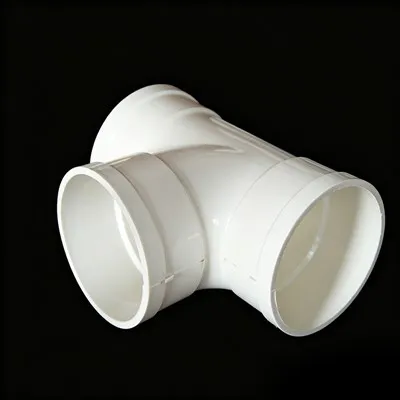
If you’re working on a residential or commercial plumbing project, and need reliable, size-accurate PPR pipe fittings that won’t cause delays or mistakes, don’t hesitate to reach out to discuss your requirements.
Plastic Pipe References
ISO 15874:2013, Plastics piping systems for hot and cold water supply — Polypropylene (PPR)
ASTM F2389-19, Standard Specification for Polypropylene (PP) Pressure Pipe Systems for Potable Water Distribution
Plumbing-Heating-Cooling Contractors Association (PHCC), Residential Piping System Standards 2022
Hebei Ruijie Pipe Industry Co., Ltd.
Address: Industrial Park, Shaozhuang Township, Suning County, Cangzhou City, Hebei Province
E-mail: 1987870474@qq.com
WebSite: https://www.rjpprpipe.com/
