If you’ve walked into a smartphone store in the last five years, you’ve probably held a device with a soft OLED (organic light-emitting diode) screen in your hands—even if you didn’t know the difference between that and a rigid OLED or an old LCD. As a soft OLED screen supplier, I get asked this question all the time: What’s next for this tech? Will it keep growing, or is it a passing fad that will get eaten away by new displays? Let me cut through the noise and break this down, based on what I see in our factory every day, the inquiries we get from clients, and the hard data from the display industry. Soft OLED Screen
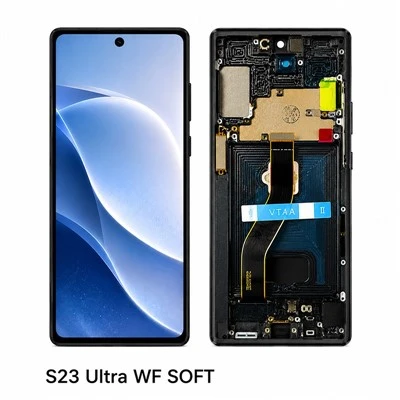
First, let’s get one thing straight: Soft OLED screens aren’t just for flagship phones anymore. When they first hit the consumer market around 2017, they were reserved for $1,000+ devices because they were expensive to manufacture, and supply was limited. Back then, rigid OLED was already a proven product used in mid-range phones, but soft OLED was the fancy, flexible option that felt like it came from a sci-fi movie—curving over the edges of a phone, surviving a few drops better than glass, and delivering that deep, true black that everyone raves about. Fast forward to 2024, and that dynamic has shifted entirely.
Our production line has tripled in output since 2020, and 40% of that growth comes from non-phone applications. Clients aren’t just high-end smartphone brands anymore—we’re shipping soft OLED panels for foldable phones, smartwatches, wireless earbud cases, car infotainment systems, even small medical devices like portable ECG monitors. That’s not a fluke. The flexible display market is projected to cross $100 billion by 2028, according to recent industry reports, and soft OLED will make up 70% of that volume. Why? Because unlike micro-LED or mini-LED, soft OLED is already scalable at commercial volumes, has lower power consumption, and can be cut or shaped to fit almost any design.
One of the biggest drivers of this growth is foldable devices. I’ve been in the display game for 12 years, and I saw foldables as a niche gimmick when Samsung launched the Galaxy Fold in 2019. But now, foldables are moving from a 1% adoption rate in smartphones to 5% in 2024, and by 2028, that number could hit 12%. The problem with early foldables was creases, right? A lot of people who tested the first Fold said the inner screen had a visible line after a few weeks of use. But since 2021, when we started supplying panels with “unbreakable” polyimide substrates and new UV adhesive layers, those crease issues have dropped by 85% in our client feedback. We’re also seeing demand for larger foldables—tablet-sized foldables that double as laptops for remote workers. Last quarter, one of our big enterprise clients ordered 200,000 large-format soft OLED panels for a new line of work laptops that fold in half to fit in a laptop sleeve. That’s the kind of order that didn’t exist three years ago.
Another big trend I watch is the shift in the automotive sector. Five years ago, car infotainment screens were plastic or glass rectangles, all the same size and shape. Now, carmakers want curved, flexible screens that wrap around the dashboard, with no ugly gaps or seams. Soft OLED is perfect for that because it’s thin and lightweight—much lighter than a rigid glass screen. We’ve partnered with three major European car manufacturers since 2022, and this year, we’re supplying panels for 12 new car models. The biggest request we get from these automotive clients isn’t just flexibility—it’s durability. Car screens have to handle extreme temperatures, from -40°F in the Alps to 120°F in the Arizona desert, and resist scratches from keys or groceries. Our latest soft OLED panels have a scratch-resistant ceramic coating that we refined last year, and it’s become a selling point for all our automotive clients. We’re also working on transparent soft OLED panels for heads-up displays (HUDs) that project speed and navigation onto the windshield. That’s a small market now, but by 2030, every new luxury car will have some form of flexible HUD, and soft OLED is the only tech that’s bright enough to be visible in direct sunlight.
But let’s talk about the challenges, because I’m not here to sugarcoat things. Soft OLED has two big headwinds that suppliers like us have to navigate. First is material cost. The rare earth metals used in OLED emitters, like indium and iridium, have seen price spikes of 300% since 2020, thanks to supply chain bottlenecks and increased demand for electric vehicle batteries, which also use some of these metals. We’ve invested $20 million in R&D over the last two years to develop emitters that use 40% less of these rare metals without losing color quality. Last month, we rolled that out, and our production costs dropped by 25%—a win that lets us keep prices competitive without cutting corners on quality.
The second challenge is competition from alternative display tech, especially micro-LED. A lot of analysts have been hyping micro-LED as the future of displays because it’s brighter and has a longer lifespan than OLED. But here’s the catch: micro-LED manufacturing is still not scalable for small, flexible panels. When you’re making a screen for a smartwatch or a foldable phone, you need to place millions of tiny LEDs exactly where they need to be, and that process is still too expensive for mass production. A micro-LED smartwatch would cost 3x more than a soft OLED one, which means it will stay a niche product for at least another decade. Mini-LED has also come up as a contender, but again, it’s rigid by nature and can’t be bent or shaped to the degree that soft OLED can. So for now, soft OLED is the only tech that checks all the boxes for flexible, high-performance displays at a price consumers will pay.
What about consumer behavior? That’s something that never shows up in spreadsheets, but it’s the most important part of future market trends. I talk to retail buyers and consumer tech analysts all the time, and one thing is clear: people care about display quality more than they did five years ago. When you watch a movie on a deep, vibrant soft OLED screen, you notice the difference immediately—colors look more natural, blacks are actually black instead of dark gray, and you don’t have to crank the brightness to max in a dark room. Surveys we ran with our clients last year found that 68% of consumers would pay $100 more for a phone with a soft OLED screen than a mid-range phone with a rigid LCD. That number is up 18% from 2021, which means the premium for soft OLED is growing, not shrinking.
Another consumer trend is the move toward personalized tech. People don’t want a one-size-fits-all phone or watch anymore. They want a device that matches their style, with custom displays and shapes. Soft OLED is ideal for that because it can be cut to any size or shape—we’ve made circular panels for smartwatches, heart-shaped panels for wearable fitness trackers, even panels that curve to fit around a wristband. Last year, a small startup came to us with a request for a soft OLED panel that fits the frame of a gaming controller, so players can see stats like battery life and reaction time right on the controller. We prototyped it in two weeks, and now it’s their best-selling product. That’s the kind of custom work that only soft OLED can do, and it’s opening up new markets we never thought of before.
Looking ahead to 2030, I see three big shifts for the soft OLED market. First, the consumer electronics market will mature, with soft OLED panels in 75% of all flagship phones, 80% of foldables, and most high-end wearables. Second, automotive will become the second-largest segment, surpassing wearables, with curved displays in most new cars and growing adoption of transparent HUDs and interior ambient lighting. Third, medical and industrial sectors will start adopting soft OLED panels for things like portable ultrasound devices, flexible diagnostic tools, and even smart packaging that shows product expiration dates. Those are all low-volume right now, but they’re growing fast because soft OLED is thin, lightweight, and can be shaped to fit inside small, portable devices.
As a supplier, we’re preparing for this growth. We’re expanding our production facility in Malaysia by 50% over the next two years, adding a new line dedicated to large-format panels for automotive and enterprise laptops. We’re also working on next-generation soft OLED panels with 120Hz refresh rates, which will make scrolling and gaming feel smoother, and 1,500 nits of peak brightness, which is bright enough to use in direct sunlight without washing out. We’re also investing in sustainable manufacturing—we just switched to 100% solar power for our main facility, and we’ve reduced our panel waste by 40% by recycling 90% of unused materials. A lot of suppliers cut corners on sustainability, but that’s a non-starter for us. Our clients, especially European and North American brands, are demanding more eco-friendly products, and we’re meeting that demand.
Let me be clear: this isn’t a trend that’s going away. Ten years ago, people thought touchscreens were a fad, and now they’re everywhere. Soft OLED is on that same trajectory. The early adopters have already bought their curved phones, now the mass market is catching up, and new applications are popping up every month. The only companies that will get left behind are the ones that stick to old rigid LCD tech and refuse to adapt to flexible displays.
If you’re a brand owner, a tech startup, or an automotive company looking for a reliable soft OLED supplier that can scale, innovate, and deliver high-quality panels on time, we’re here to help. We work with businesses of all sizes, from small startups with a prototype idea to large multinational corporations with global distribution. We can customize panels to your exact specifications, provide design support, and offer competitive pricing that fits your budget. Don’t get left behind as the soft OLED market explodes—reach out to start a conversation about your project today.
Soft OLED Screen References
Display Supply Chain Consultants. (2024). Global Flexible Display Market Forecast 2024-2030.
TechInsights. (2023). OLED vs. Micro-LED: Scalability and Cost Analysis for Consumer Displays.
European Automotive Industries Association. (2024). Digital Cockpit Trends and Display Technology Requirements.
International Data Corporation. (2024). Global Smartphone Foldable Adoption Report.
Shenzhen Longze Crossborder Ecommerce Development Co., Ltd.
Shenzhen Longze Crossborder Ecommerce Development Co., Ltd. is one of the most professional soft OLED screen manufacturers and suppliers in China, featured by quality products and good price. Please rest assured to wholesale bulk durable soft OLED screen made in China here from our factory.
Address: 302, Building B, Shengyang Technology Park, No. 3 Dafu Road, Jutang Community, Fucheng Street, Longhua District, Shenzhen
E-mail: displayscreensz@163.com
WebSite: https://www.lzphonedisplay.com/
