When I started my business supplying wood chipper and pellet mill spare parts 12 years ago, I’d hear the same question from every new customer: “Can I mix and match parts from different brands without breaking anything?” Back then, I used to hem and haw—every machine, every line of wear part, every precision component seemed tailored to a single brand’s engineering, right? Now, after thousands of customer installations, warranty checks, and field repairs, I can answer that clearly… but it’s not a simple yes or no. It depends on three core things: how well you match fit and material specifications, how your machine is set up, and the tradeoffs you’re willing to make for cost or lead time. Wood Chipper and Pellet Mill Spare Part
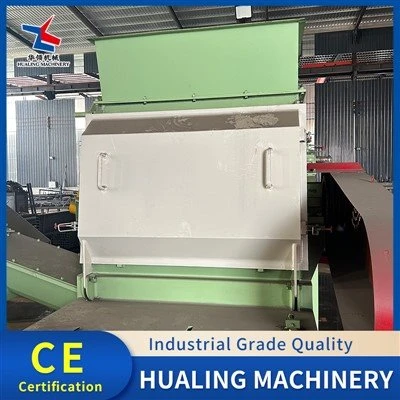
Let’s start with the basics: wood chippers and pellet mills aren’t just random machines—they’re engineered systems, and their spare parts are designed to work as a whole. Take a chipper’s main knife holder, for example. If you own a Vermeer chipper, its knife holders are forged from a specific high-tensile steel, machined to a tolerance of 0.002 inches, and coated with a heat-resistant surface to handle the 1,200-degree friction generated when the knife spins 1,500 times a minute. A competitor’s knife holder, say from a Morbark, might have a slightly different bolt pattern, a thinner cross-section, or a steel alloy that softens 200 degrees earlier. Swap those two, and within 50 hours of run time, the Morbark holder will bend, or the knife will wobble and nick on the chipper’s housing. That’s not a failure of the part—it’s a mismatch of engineering intent.
I’ve seen this play out dozens of times with pellet mill dies, which are some of the most commonly mixed parts. Pellet mills rely on die holes that are precision-machined to control moisture content, compression pressure, and pellet density. A die from one brand might have a 6mm hole with a 1:3 length-to-diameter ratio, designed for pine sawdust, while a die from another brand might have the same outer diameter but a 1:4 ratio, meant for hardwood. If you swap a die that’s tuned for softwood into a mill built for hardwood, you’ll get pellets that crumble halfway through cooling, or you’ll burn out the mill’s drive motor because the extra compression demands too much torque. A customer in Oregon tried this two years ago: he bought a $1200 die from a third-party brand to save $400, and two days later his mill seized up, costing him $3000 in repair and $1500 in lost production. That’s the tradeoff no one warns you about.
That said, mixing and matching doesn’t have to be a disaster—if you stick to parts that share universal fit and material specifications. Let’s talk about simple wear parts first: things like chipper blade bolts, pellet mill roller bearings, or feed auger flighting. Most manufacturers use ISO standard bolt sizes (M12, M16) and bearing dimensions for common line sizes, because standard parts are cheaper and easier to source. I supply a lot of these parts, and when a customer comes to me with a John Deere chipper that needs a replacement shear bolt, I can offer a grade 8 bolt from my inventory that fits perfectly, works the same, and costs 20% less than the OEM part. The key here is checking the part number’s spec: if your OEM part lists a tolerance, a hardness rating, and a load capacity, your third-party part needs to match all of those. Don’t just go by the outer shape.
Another area where mixing works is roller shells for pellet mills. Wait, pellet mill roller shells—most people think they’re brand-specific, but for many mid-size mills (like the ones made by Schumacher or Biomass), roller shells from different reputable suppliers will fit, as long as you match the shaft diameter and the core’s bore depth. I’ve had customers who run 10 different mills at their farm mix roller shells from three different brands, and as long as they rebalance the rollers every time they install a new shell, they haven’t had a single issue in two years. The rebalancing step is non-negotiable here, by the way. If you skip that, the roller will wobble, put extra stress on the mill’s main shaft, and lead to premature bearing failure.
The biggest risk comes when you mix precision parts that are tied to a machine’s specific calibration. Let’s use a wood chipper’s flywheel as an example. The flywheel is balanced to within 0.5 ounces of imbalance for a specific speed and feed rate. If you swap a flywheel from a different brand that’s balanced to 2 ounces, the extra vibration will loosen bolts, crack the chipper’s housing, and even cause the drive belt to slip excessively. I had a customer in Canada who did this last winter; his chipper was out of service for three weeks while we repaired a cracked housing, and the total cost was more than the price of a year’s worth of OEM flywheels. That’s the hidden cost of cutting corners.
So, what’s the safe way to mix and match? First, always confirm the part’s specifications with either your machine’s manual, your OEM service technician, or your parts supplier (that’s me, by the way—we keep detailed specs for every brand we carry). Second, test small, low-stakes parts first before swapping something critical. If you need a replacement for a feed auger, try a third-party flighting that matches the length and diameter, and run it for a shift before you swap the main die or knife holder. Third, budget for the extra maintenance that comes with mismatched parts. If you’re running mixed parts, you’ll need to do monthly vibration checks, replace shear bolts twice as often, and rebalance rollers every 500 hours—those costs add up, so make sure your “savings” from mixing parts doesn’t get eaten by extra maintenance.
Now, let’s talk about when mixing parts makes total sense. For small operators who run multiple machines, mixing is often the only way to keep costs down without losing production. A customer of mine in Iowa runs three chippers and two pellet mills; he mixes OEM parts for critical components (knife holders, dies) and third-party parts for bolts, bearings, and augers. That saves him about $2,500 a year, and he follows all the rules we outlined, so he hasn’t had a single unplanned downtime in three years. For replacement parts that are obsolete—say, a 10-year-old chipper from a brand that stopped making spare parts—you have no choice but to mix parts that fit as close as possible. I’ve been able to mill custom holders for old chippers using high-tensile steel, as long as the customer sends me the old part to reverse-engineer. That’s a service I offer, and it’s a lifesaver for operators with vintage equipment.
The key takeaway here, from 12 years of seeing every mix-up and every successful swap, is that mixing isn’t bad—what’s bad is mixing without understanding what you’re changing. A lot of suppliers will tell you that third-party parts are never compatible, and a lot will tell you that you can mix anything to save money. Both are wrong. The truth is, it’s like putting together a car: you can put a brake pad from one brand on a rotor from another, as long as the brake pad’s material matches the rotor’s heat capacity, and you’ll save money without issues. But you can’t put a brake pad from a tiny car on a heavy-duty truck’s rotor and expect it to stop safely. The same goes for wood chippers and pellet mills.
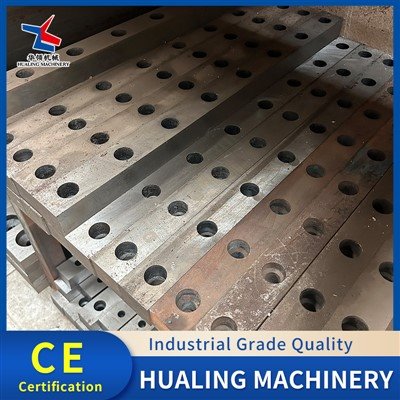
If you’re unsure about a part you want to mix, or if you need help sourcing OEM-compatible parts that fit your machine, reach out. I’ve helped hundreds of customers sort through their parts questions, from small hobby farms to large biomass operations. Whether you need a replacement shear bolt, a new pellet mill die, or advice on mixing parts for your equipment, I can help you avoid the common mistakes that lead to downtime and extra costs. Contact me today to discuss your specific needs, and we’ll work together to find the right parts for your wood chipper and pellet mill.
Wood Shredder References
- American Society of Agricultural and Biological Engineers. (2020). Standard for Agricultural Machinery: Performance and Safety of Wood Chippers. ASABE Standards.
- International Organization for Standardization. (2018). Standard for Pellet Mill Spare Parts: Tolerances and Material Specifications. ISO 18208:2018.
- National Biomass Association. (2021). Best Practices for Maintenance of Wood Pellet Production Equipment. NBA Technical Bulletin Series.
- Vermeer Corporation. (2019). Wood Chipper Spare Parts Compatibility Guide. OEM Engineering Documentation.
- Biomass Magazine. (2022). Cost-Benefit Analysis of Mixed Spare Parts for Small-Scale Pellet Mills. Industry Research Report.
Shandong Hualing Machine Manufacturing Co., Ltd.
As one of the most professional wood chipper and pellet mill spare part manufacturers and suppliers in China, we also support customized service with low price. Please rest assured to buy discount wood chipper and pellet mill spare part in stock here from our factory. If you have any enquiry about quotation, please feel free to email us.
Address: Industrial Park, Dagong Village, Changshan Town, Zouping City, Shandong Province
E-mail: hualing@sdhualing.com
WebSite: https://www.hualingmachine.com/
